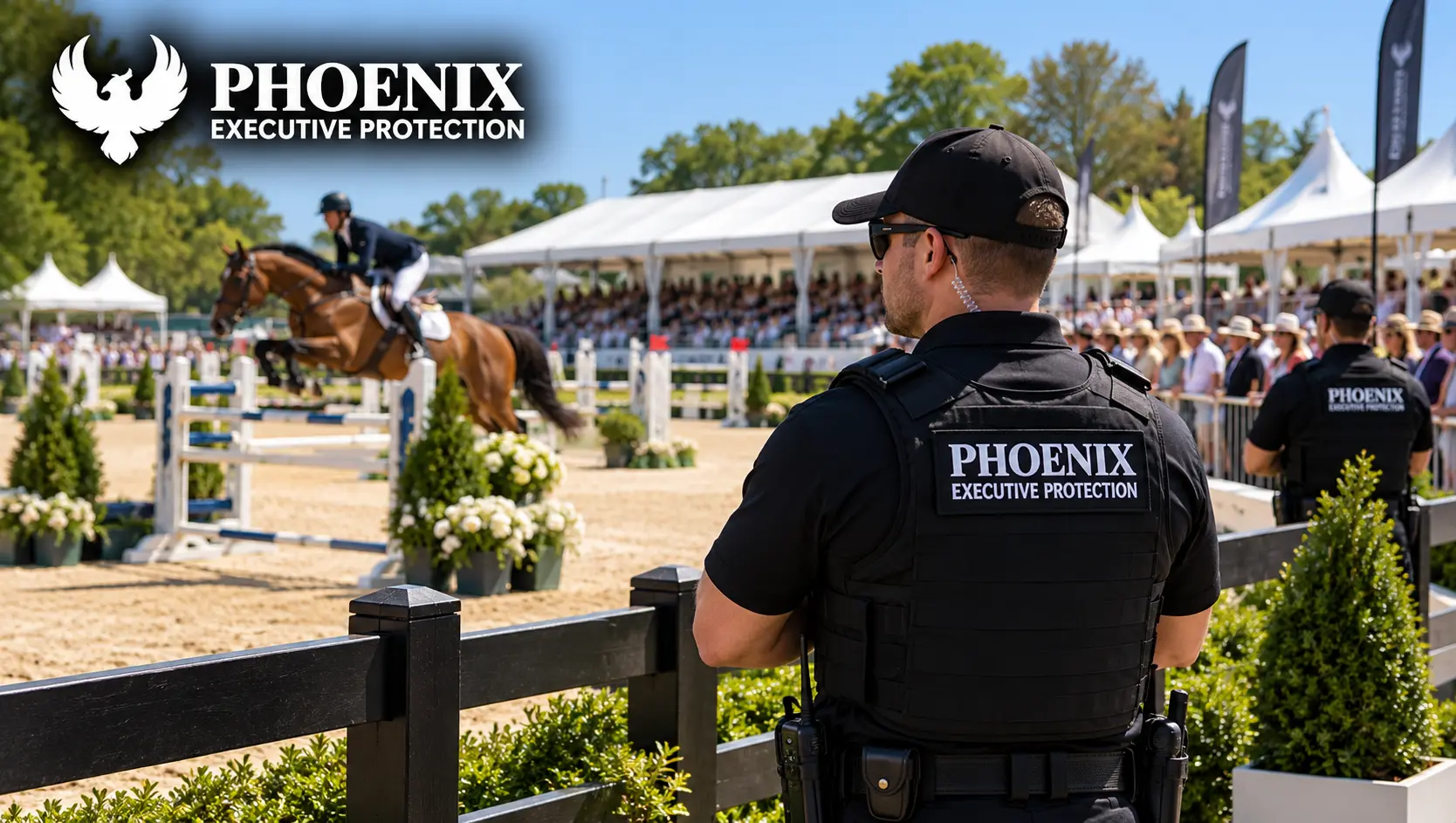
Picture an August evening at the Shelby County Fairgrounds, with trailers still rolling in while spectators line up at the gate. For a few busy hours, horses, your competitors and the public are all active within a limited space. This is why a horse show needs well thoughtout security for each zone. This guide to equestrian event security in Shelbyville KY walks the grounds the way people arrive.
Why Horse Shows Need Their Own Security Plan
A horse show has two crowds who want different things from the same event. Spectators come for one evening and head home after the last class. Competitors live on the grounds for days with their horses and gear. Horses spook at noise and crowds, so a loose horse can quickly become a security problem as well as a safety one. That is why horse show security must be planned by keeping both the audience and the exhibitor angles in mind.
Plan Your Security Zone by Zone
The zones below follow the order people arrive, starting at the parking lots and ending at the barns.
Trailer Lots and Parking
A trailer lot fills with big rigs that sit unattended for hours while their owners work in the barns. Keeping horse trailers apart from spectator parking cuts traffic and lowers the risk of theft from tack compartments. For parking management, post an officer at the lot entrance to direct late arrivals and keep lanes open. Light both lots well, because evening sessions often end well after dark.
Spectator Entrances and Crowd Flow
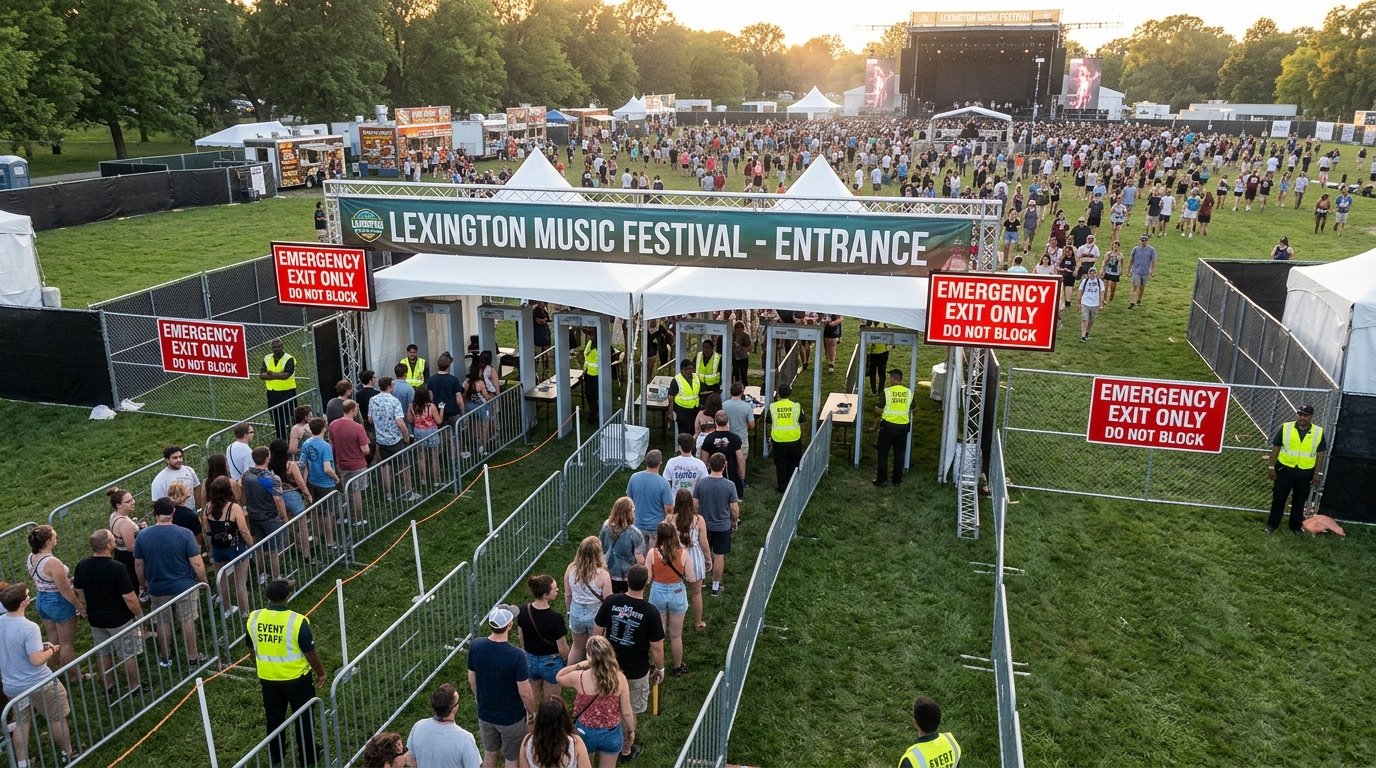
Spectators tend to arrive in a rush in the half hour before the evening session starts. The basics of event security still apply here, starting with a staffed gate and a clear wristband check. The horse-specific risk is different: spectator walkways must never cross the path horses take to the warm-up ring. Post an officer at each crossing point to hold people back while horses pass.
Vendor Gates and Deliveries
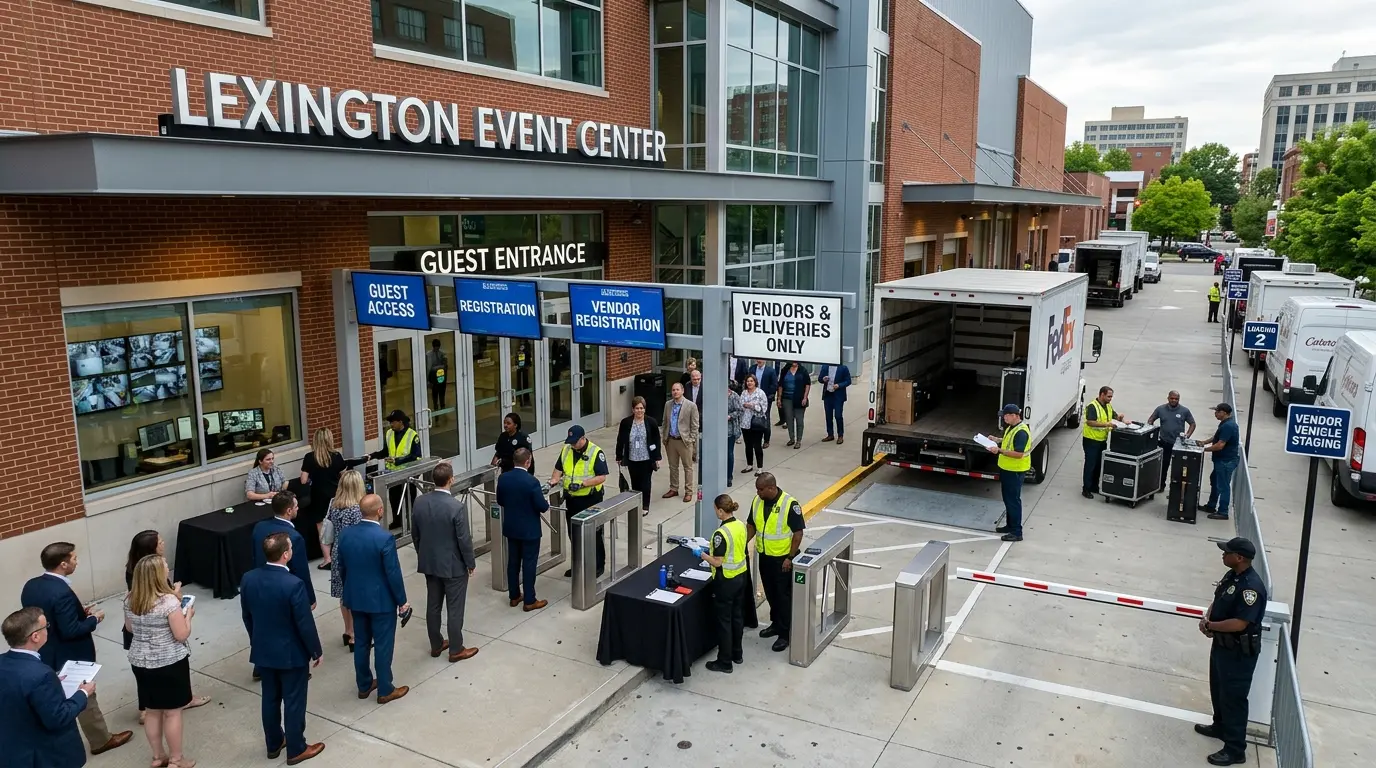
Vendors set up before the gates open and pack up after the crowd has gone home. A separate vendor gate with its own credential keeps delivery trucks out of the spectator line and away from the rings. Schedule deliveries for the early morning hours, before horses start moving between the barns and the show ring.
Restricted Stable Zones
The stable area holds the most value, so it should see the fewest people. Exhibitor and groom credentials should be visually distinguishable from spectator wristbands, so a security officer can tell them apart at a glance. International federation rules require a restricted stable area and a night access list, and local shows in Shelbyville can borrow that idea. An officer posted at the barn entrance stops most curious wanderers before they reach a stall.
A simple credential plan might look like this:
- Exhibitors and riders — barns, warm-up ring and competitor areas
- Grooms and trainers — barns and tack stalls at all hours
- Vendors — vendor row during posted hours
- Spectators — stands, concessions and public walkways
- Judges and VIP guests — the judges’ stand and hospitality area
Keep Emergency Routes Open All Day
Every show needs a route an ambulance or fire truck can use without having to move a trailer. These lanes fill up as trailers and cars arrive, so officers have to keep them clear from setup to close. Decide in advance who closes which gates if a horse gets loose, so nobody has to sort it out in the moment. Also, share the grounds map with Shelbyville fire and EMS crews before the show opens.
After the Crowd Leaves: Overnight Stable Security
Spectators go home after the last class, but the horses stay on the grounds overnight. An officer walking the barns is enough to discourage most theft. They can also catch a fire or a horse cast in its stall early. One big problem with equestrian venue security in Kentucky is that it is often planned for show hours and forgotten once the lights go down. The fix: a night watch security officer with an access list that tells the officer exactly who belongs in the barns after dark and who must be stopped.
Placing Security Guards for Horse Events
There’s no single guard count, because the number follows your zones and your show hours. Most teams of security guards for horse events start with one post at each gate and each barn entrance. Roving event security officers then cover the parking lots, the grandstand and the walkways between them. Ask for officers who are comfortable around horses and know how to move without startling them.
Contact Phoenix Executive Protection LLC to walk your Shelbyville venue with us and build a zone plan that fits your show. Then you can run a show where everyone gets to focus on the horses.
Frequently Asked Questions
These are the questions show managers ask Phoenix Executive Protection most often during planning.
Does a small local horse show need security guards?
Yes, even a small show benefits from one officer at the stable entrance and one in the parking area. Those two spots are where most theft and traffic problems start, no matter how small the crowd is.
How early should we start security planning for a horse show?
Start as soon as your show date and the grounds are locked in. Zones, gates and credentials need to be mapped before entries close and passes go to the printer.
Who handles a loose horse during a show?
Experienced horse handlers should be the ones who catch a loose horse. Security’s job is to close gates and hold the crowd back so the horse has room to slow down and stop.