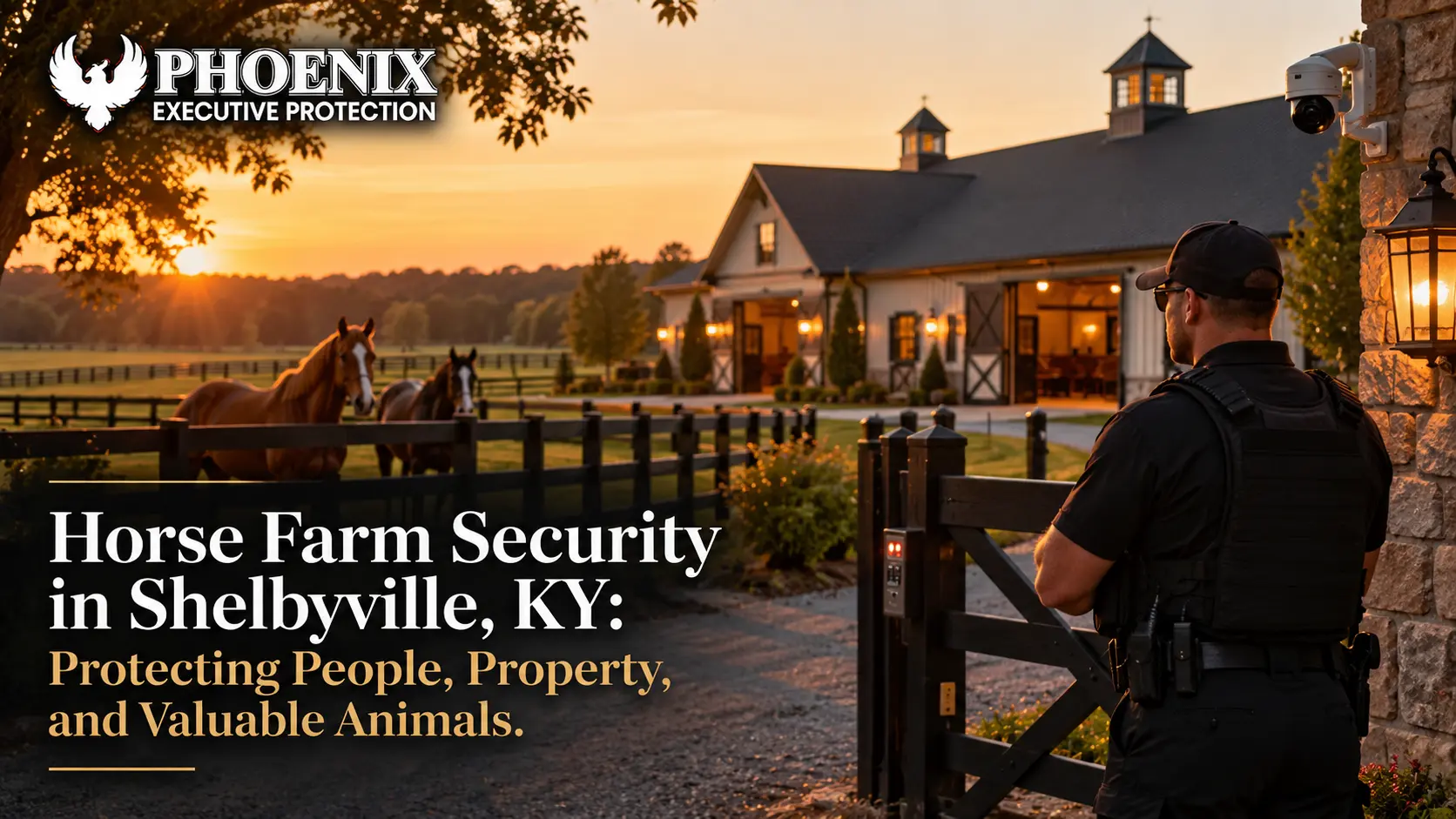
Picture a quiet night on a Shelby County farm. The horses are in, the staff has gone home, and one road gate stands between the barn and the highway. Most farm losses aren’t dramatic. A tack room gets emptied, or a trailer quietly disappears. Horses, people, and equipment each need a different kind of protection. This guide covers horse farm security in Shelbyville KY, walking the farm from the gate inward.
What Makes Equestrian Property Security Different
Shelby County has its own story, and it shapes what farm owners here need to protect.
Shelby County is the officially designated American Saddlebred Horse Capital of the World. A University of Kentucky equine survey estimates about 6,500 horses on 770 equine operations in the county. Here, a valuable horse is rarely far from a public road.
A home security plan serves to safeguard one house and the occupants within it. The equestrian property security must also include protection for animals that can be stolen or injured. Valuable structures are spread over acres of land. Strangers came onto the property most weeks, as boarders, lesson students, and farm-tour guests.
Securing the Farm Zone by Zone
Start at the road and work inward. Each zone has a weak spot, a physical fix, and a habit that makes the fix work.
Farm Entrances and Perimeter Fencing
The gate is the first place a thief tests. Many farm gates lift straight off their hinges, so a padlock on the latch side isn’t enough. Use a shrouded padlock, plus a second chain on the hinge side. Then walk the fence line on a schedule and repair any gap the same day.
Pastures Near the Road
Horses that are turned out near a road where there is a high volume of traffic are the most vulnerable to theft, particularly at night. A slow moving truck with a trailer attached may come on to the shoulder to swing into the road without anyone noticing. Relocate night turnout to further into the property. Next, make sure to check on the horses at different times of the day so that no one knows the farm’s schedule.
Barn Security: Stalls, Aisles and Tack Rooms:
There can be thousands of dollars worth of saddles behind one door in a tack room. It is difficult to alarm barns because horses, cats, and birds will set off motion sensors. Install door contacts in tack and feed rooms, and night-vision cameras in aisles. Lock the tack room every night, even if you’ll be back early.
Who is on the Property?
You can’t keep everyone out, since farriers and boarders visit on a regular basis throughout the week. Some thieves initially come in as guests or employee, so a sign-in log with names and plate numbers is important. Have a designated gate for visitors to use that can be seen by someone. Staff access should be commensurate to each job and barn codes should be changed when staff members leave.
After Hours: Where Farm Patrol Security Fills the Gaps
Even a well-built farm has quiet hours when nobody is watching, and that is when patrols earn their keep.
There are cameras that record what happens, but they cannot get in the way. Even if you get a phone call at 2 AM, you are still making the decision if it’s worth taking a risk to drive out in the dark. Farm patrol security has a man on the property to watch the alert as it happens. Every camera system has its blind spot on large acreage.
An overnight patrol follows a set of checks on every round:
- The officer tests each gate lock and notes any vehicle parked along the fence line.
- The officer walks the barn aisles and confirms tack rooms and restricted barns are locked.
- The officer looks for a horse that is cast, loose, or in distress, then calls the farm manager.
- The officer watches for smoke or electrical trouble in barns and hay storage.
- The officer logs every round so the owner can see what was checked.
If a patrol finds a fire or an injured horse, it calls for emergency response right away, not at morning feed.
Choosing Horse Farm Security Guards in Kentucky
Not every guard is right for a barn, so the hiring choice matters as much as the gear.
The right guard knows how to move around horses without spooking them. Patrol routes should fit the farm’s feeding and turnout schedule, so the officer knows what normal looks like. Ask whether the provider has worked horse farm security guards in Kentucky roles or other equestrian facilities before. Random patrol times work better than a fixed schedule.
Most farms begin with better gates and cameras and then have night patrols to fill in gaps. Contact Phoenix Executive Protection LLC for a walkthrough of your Shelby County property. You will get a better sleep, knowing that someone has been checking the barn tonight.
Frequently Asked Questions
Is it necessary for a horse farm to have security cameras?
A good beginning is cameras recording, but they do not do anything else. A patrol will be able to fill in the blind spot and respond to an alert in real time.
What alarm would be effective in a horse barn?
Motion sensors don’t work nearly as well as door contacts on barn/tack room doors. Animals walking around inside the barn trigger motion detectors and trigger false alarms.
Do I need to record each person’s visit, including repeat visitors?
Yes, log everyone. A log with names and numbers of the plates will help law enforcement in the event of a loss.