You’ve just confirmed a speaker and a date for an event a few blocks from the Kentucky State Capitol. The security questions usually show up later than they should, often after the invitations have gone out. Calm events are usually decided weeks before the doors open. This guide to government event security in Frankfort KY is written for event organizers, not security professionals.
The planning work falls into seven areas, listed here in the order you’ll face them.
- A written event risk assessment
- One coordination plan with law enforcement
- Controlled entry and credential checks
- Crowd flow and demonstration planning
- A protected route for VIP arrivals
- Emergency and incident response plans
- A debrief after the event
Each area of security planning for government events gets its own section below. Start with risk, because every later decision depends on it.
Why Government Events in Frankfort Need Their Own Security Plan
Many event organizers reuse the security plan from a past conference or private event. It’s an easy shortcut, but government-related events attract people who disagree with each other, not only people who came to celebrate. Elected officials and reporters raise an event’s profile, which brings more eyes and more risk. Government event security starts with the audience, not the venue.
In January 2021, the governor closed the Kentucky State Capitol grounds for a day after threats against state capitols nationwide. Kentucky State Police worked with Frankfort Police and the Kentucky National Guard to secure the area. KSP provides security at the Capitol every day. If you’re planning near state grounds, you plug into that existing system of public-sector event protection instead of building one from scratch.
Frankfort hosts all kinds of events, and each one comes with its own risks.
- When there’s a rally at the Capitol, you’ll see supporters and opponents sharing the same stretch of grass—tensions can spike fast.
- Bill signings and press conferences squeeze officials and media into tight rooms, where there’s barely space to breathe, let alone move.
- Town halls may start off civil, but anyone who’s been to one knows things can get heated with zero warning.
- Inaugurals and ceremonies close off downtown, spreading crowds out over multiple blocks and messing with normal traffic.
- Agency receptions at hotels or private venues put invited guests next to the public, which is another headache.
- Campaign stops? They’re a special breed—thrown together with hardly any time to plan.
Start With an Event Risk Assessment, Not a Guard Count
The number of security guards you need comes out of your event risk assessment, not the other way around. Federal guidance rates major events on a short list of factors. The source is a U.S. Department of Justice COPS Office guide built on FBI practice. You can turn those factors into eight plain questions.
Eight Questions That Set Your Security Level
- How many people do you expect? Larger crowds need more entry points and more staff at each one.
- Has anyone made threats tied to the event or its speakers? Any known threat moves you up a level.
- Does the event carry political or symbolic weight? Contested issues and symbolic dates draw people who want attention.
- How long will it run? Longer events need relief staff so posts never go empty.
- Where is it? An open lawn is harder to control than a ballroom with two doors.
- Who is likely to attend? Groups with opposing views need a separation plan.
- Will media cover it? Cameras give a disruptor a bigger stage.
- Will government officials or other dignitaries attend? They bring their own protective needs, and sometimes their own security detail.
The COPS guide uses a simple formula: risk is how bad something would be, multiplied by how likely it is. A shoving match at the door is fairly likely, but the harm stays limited. A vehicle driving into a crowd is unlikely, but the harm would be severe. Cover the common problems first, then add event threat mitigation steps for the serious ones.
Matching the Risk Level to Your Security Posture
Most Frankfort events land in one of three levels.
| Risk Level | What It Looks Like in Frankfort | Typical Security Posture |
| Routine | An invitation-only agency awards luncheon in a hotel ballroom | Guest-list check at one entrance; a small team of security officers; venue staff briefed on emergency exits |
| Elevated | A public town hall on a contested bill, or a Capitol-lawn rally with a known opposing group | Bag checks at screening checkpoints; visible, uniformed security personnel; law enforcement briefed in advance; a separate demonstration area |
| High | A governor’s address or bill signing with statewide media and a history of threats | Layered security perimeter; credentialed zones; VIP arrival plan with protective details; command post with police on site |
Put your assessment in writing and share it with your partners. When you call the police, they’ll usually ask for it first.
Build One Plan for Law Enforcement Coordination
Law enforcement coordination goes best when you make the first call. The States United guide for political events recommends naming one point of contact on each side early. Bring your attendance estimate and the officials on your guest list to that first conversation. Then ask a short question: will any official arrive with a protective detail?
Frankfort event security depends on several agencies working from one plan. Here’s who typically covers what.
- Kentucky State Police → security on the Capitol campus and inside state facilities
- Frankfort Police Department → city streets and off-campus venues
- Frankfort Fire Department and EMS → medical standby and fire lane access
- Local emergency management → severe weather and large-scale emergencies
- Venue management → the building’s evacuation plan
- Officials’ protective details → arrival timing and inner-perimeter rules
- Your security company → posts, screening and incident reports
Set Up a Command Post and One Chain of Decisions
Larger events use the Incident Command System, a standard framework that gives every agency the same structure. Name an incident commander and a deputy before event day, as States United advises. Your command post is one place where you, the security lead and the police liaison decide together. Agree on one radio channel, plus a backup if the radios fail.
Let’s be real: once the event kicks off, a lot of things change, no matter how airtight your plan looked in the office. States United says, run every change past the incident commander, and let everyone who’s affected know right away. For instance, if a speaker runs 40 minutes late, now your VIP holding room stays staffed longer. Flexibility only helps if one person is actually in charge.
Who Removes Whom: Agree Before Your Event
You need to settle on paper when someone gets tossed out and who’s actually doing it. Your security and the police should have a clear agreement, not just a handshake. Nowhere does this matter more than town halls, where hecklers are part of the gig.
Here is what happens when that goes sideways: At an Idaho town hall in February 2025, plainclothes security dragged a heckler out. The police chief went public condemning it, and the county sheriff said he had no clue who the guards even were. Suddenly, it wasn’t about the heckler—it was about mystery guards acting on their own. Security should stand out, not blend in. And removals? They need to follow pre-agreed rules.
Access Control for Government Events: Drawing the Lines
Your risk assessment needs to turn into actual lines and zones you can see on a map. Think in three rings.
- Start with the outer ring: it covers cars, road closures, parking lots, and where the buses go.
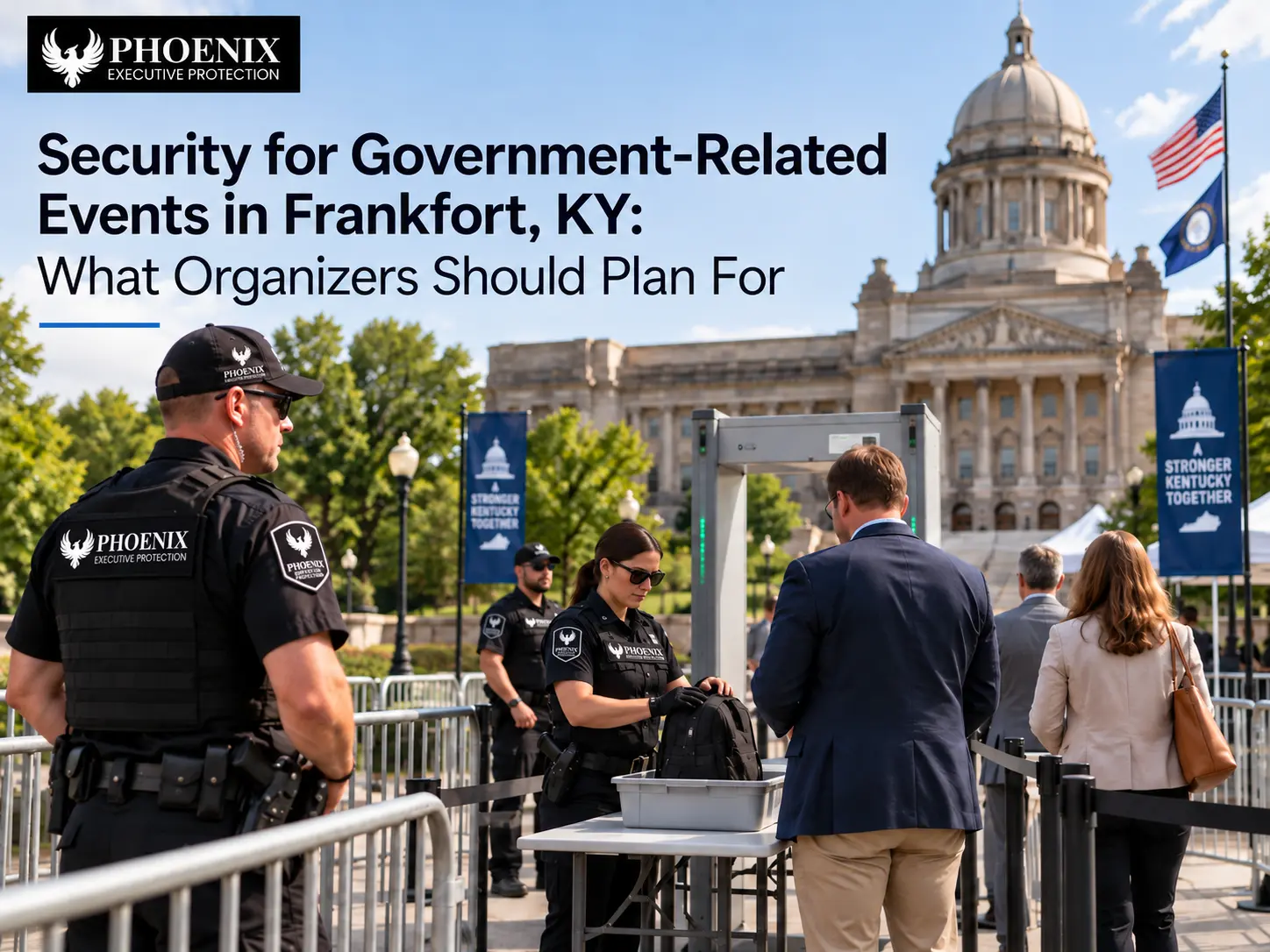
- The middle ring screens people: checkpoints, guest lists, that sort of thing.
- The inner ring is the last line: protecting the stage and VIPs. Only people with credentials get in, and security should sweep the place before anyone important arrives.
Managing the Door Without the Bottleneck
If you make screening tighter, folks feel safer—but only if they are not stuck in a security line half the morning. The trick is to open enough entry points for the rush right before start time. Don’t plan for your average flow; plan for the crowd that shows up ten minutes before kickoff.
Announce bag checks before the event—put it in the RSVP confirmation, stick reminders on the approach, and make sure your banned items list matches state policy. That way, there’s no confusion or angry debates at the door.
Credential Verification for Staff, Media and Guests
A ticket gets someone in the door. A credential identifies a specific person and the zones that person can enter. Simple color or number codes let a security officer read zone access at a glance. Volunteers are often overlooked, but they need credentials too if they’ll enter restricted access areas.
Here’s a simple way to set up guest credentials by group.
- Event staff and volunteers — assigned posts and work areas
- Media — the press riser and interview area
- Invited guests — seating and reception space
- Officials and their staff — the inner ring and VIP holding room
- Vendors — loading areas during setup and teardown
Crowd Management Starts Before the Crowd Arrives
Crowd management is all about prep work. Walk the site yourself and trace how people will move from their cars or buses to the entrance. Bus groups lead to surges—drop them off away from the main door, so things don’t jam up. Always keep emergency exits clear, from setup till teardown.
Some things need their own plans:
- If buses are coming, pick a separate drop-off spot.
- If it’s outside, check for spots where people can’t see or hear the stage, because that’s where crowds push forward.
- If you expect a counter-protest, build in a buffer zone with the police.
- If you’re using event marshals, give them bright vests so everyone can spot them.
- If there’s a maximum capacity, count everyone—staff and security included—not just the guests.
Dealing With Protests and Free Speech
Lots of organizers want protesters out of sight. But if you’re on public property, you can only restrict time, place, and manner—not what people say in a demonstration. Kentucky law counts any group of 12+ people protesting as a demonstration.
Treat that as general guidance, though. Always check with law enforcement and whoever owns the property before setting any limits.
The best approach is to talk early. States United says reach out to any group planning to protest, give them a point of contact, and establish rules together. The COPS guide found that the best results come from police being present but not overbearing. Often, a calm, visible presence is enough to stop trouble.
VIP Arrivals and Departures
Arrivals and departures are when officials are most vulnerable—they are outside your controlled zone, and that’s when problems pop up. Even the strongest inner ring won’t help if you can’t control how people get into it. If officials travel with their own security team, talk to them first and build your plan around what they need. Don’t try to outdo or sidestep them—just coordinate.
Plan with these things in mind, and you’ll be able to keep your event moving and your people safe. A simple timeline keeps everyone on the same clock.
- The day before — Walk the arrival route and the holding room with the detail or police liaison.
- Two hours out — Sweep and lock the VIP holding room, then post a security officer at the door.
- One hour out — Clear the private entrance and confirm vehicle staging with police.
- On arrival — Hold the press at a set position and move the official straight to the holding room.
- During the event — Keep a staffed, clear path between the stage and the holding room.
- At departure — Use a different exit or time window than the public.
Press coverage and VIP arrival security can work together. Give photographers a fixed position with a clean sightline to the entrance. That keeps the official visible to cameras while the vehicle path stays clear.
Emergency Response and Incident Response: Put It in Writing
Most event venues already have evacuation plans reviewed by the fire marshal, as the COPS guide notes. Your job is to fold that plan into your event, not reinvent it. Venue security staff know the building’s emergency exits and should brief your team. What usually needs adding is who makes the call to evacuate and where people regroup afterward. Fire and EMS vehicles also need a clear access route.
Scenarios to Plan For
| Scenario | First Move | Who Decides |
| Severe weather or lightning | Move people to the pre-identified shelter | Incident commander, with the venue manager |
| Medical emergency | Call 911 and guide EMS in from a set access point | Nearest staff member calls; security clears the path |
| Suspicious package | Clear the area without touching it; notify police | Law enforcement |
| Disruptive attendee | De-escalate verbally; remove only under the agreed policy | Security lead, with the police liaison |
| Lost child or vulnerable adult | Radio a description to every post and watch the exits | Security lead |
| Threat against an official | Move the official to the holding room or vehicle | Protective detail |
Kentucky weather can turn fast during outdoor-event season. The COPS guide points to a tornado that struck during a state fair in Tulsa. Assign one person to watch weather alerts for the whole event.
Every incident, even a minor one, should be written down the same day. Those notes feed your debrief and protect you if questions come up later. Professional event guard services hand over incident reports without being asked.
Choosing Security Guards for Frankfort Public Events
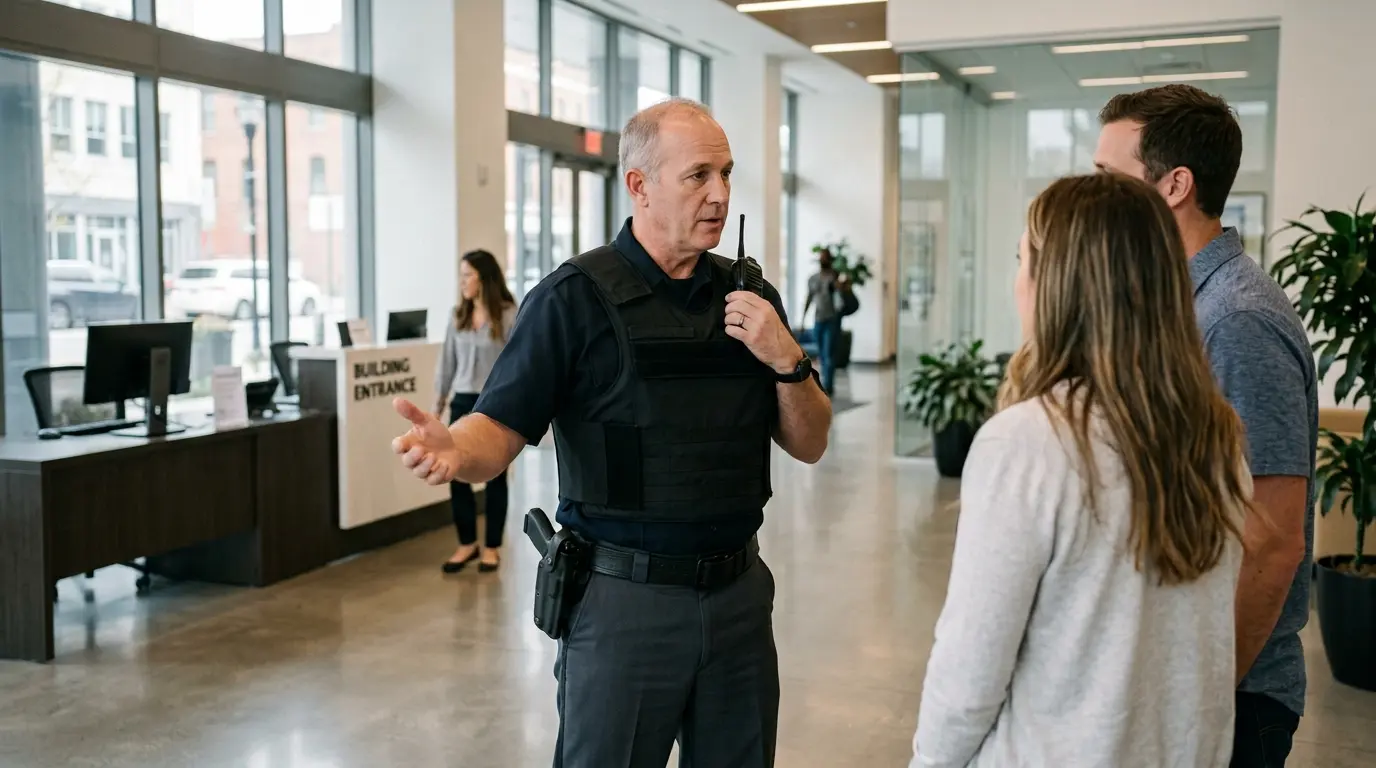
Private security and police do different jobs at a government event. A security officer typically staffs entry points and checks credentials. Security teams also guide crowds and watch restricted areas. Police handle arrests and criminal threats. A good plan writes down both roles.
The number of guards on the schedule isn’t the whole picture. The COPS guide warns planners not to underestimate the need for relief staff, and it counts supervisors separately. A six-hour rally with eight posts needs extra officers to cover breaks, or posts sit empty at the worst moment. Ask how many supervisors the security company will assign.
Questions to Ask Before You Sign
- “What licenses or local permits do your officers hold for work in Frankfort?” Guard licensing follows local laws that vary across Kentucky, so ask for documents, not assurances.
- “Can you send a certificate of liability insurance?” Under 200 KAR 3:020, approval for an event on state grounds can require proof of insurance.
- “How do you train officers for political or protest-adjacent events?” Listen for de-escalation training and a rule that officers stay neutral on the issues.
- “How will your officers be identified?” Uniforms or marked vests should make them easy for guests and police to recognize.
- “Who will coordinate with Kentucky State Police or Frankfort Police?” A named liaison beats a general promise.
- “Have you worked events on the Capitol campus?” Experience with state rules saves time on event day.
- “What will we receive after the event?” Expect written incident reports and a debrief meeting.
Trained security is only as good as the plan it follows, so choose event security services that help you build it.
After the Event: Debrief While Details Are Fresh
The work isn’t done when the last guest leaves. Both public safety guides recommend a debrief and a written after-action report. The core question is simple: what would you change next time? Include your security company and law enforcement partners in the review. For multi-day events, ask supervisors for a short summary each night.
States United also recommends noting how security arrangements affected the surrounding community. In Frankfort, inaugural street closures affect residents and businesses in South Frankfort and downtown. Share a summary with your partners, but keep sensitive security details on a need-to-know basis.
A Timeline for Event Security Planning in Frankfort
The checklist below turns this guide into a timeline you can follow. High-risk events should start much earlier, since the COPS guide recommends 12 to 18 months of planning for major events.
30 or more days out
- Complete and share your event risk assessment
- Confirm any state or city permits your venue requires
- Name your point of contact with law enforcement
- Request proposals from security companies
One to two weeks out
- Finalize the site map with all three rings marked
- Issue credentials and publish your bag policy
- Confirm the VIP arrival plan with protective details
- Agree in writing on removal rules
Event day
- Walk the site for changes since the plan was written
- Brief every staff member and security officer
- Open the command post and test radios
After the event
- Collect badges and incident reports
- Hold the debrief and write the after-action report
A secure environment at a government event comes from planning done early. Between police coordination and screening, that’s a lot for a small organizing team to carry. Talk with Phoenix Executive Protection LLC, a team that knows Frankfort and the Capitol campus, about security solutions for your event. Few things bring more peace of mind than a plan everyone has agreed to.
Frequently Asked Questions
How early should I hire a security company?
Hire one as soon as you have a date and a venue. The provider’s input shapes your site map and staffing plan. High-risk events need far more lead time, since the COPS guide suggests 12 to 18 months for major events.
What’s the difference between private security and law enforcement at a public event?
Private security manages access and guides crowds, while law enforcement handles crimes and arrests. The two should agree in writing on removal rules before the event, as the COPS guide recommends. That agreement prevents confusion when a tense moment arrives.
How many security guards does a government event need?
No single ratio fits every event. The count comes from your posts and entry points, plus relief staff to cover breaks. Ask each provider to justify its staffing plan post by post.