Your new employer just sent an onboarding list. One line asks for “current CPR certification.” So you search for classes in Louisville, Kentucky, and two names keep popping up: BLS and Heartsaver. They sound close enough to swap. They are not. Pick the wrong one, and you may pay for a second class.
The BLS vs Heartsaver CPR choice comes down to what you do at work and what your employer will accept. This guide shows who each course serves. It explains how the skills tests differ. It also covers what to confirm before you hand over any money.
BLS vs. Heartsaver CPR: What Is the Difference for Different Learners?
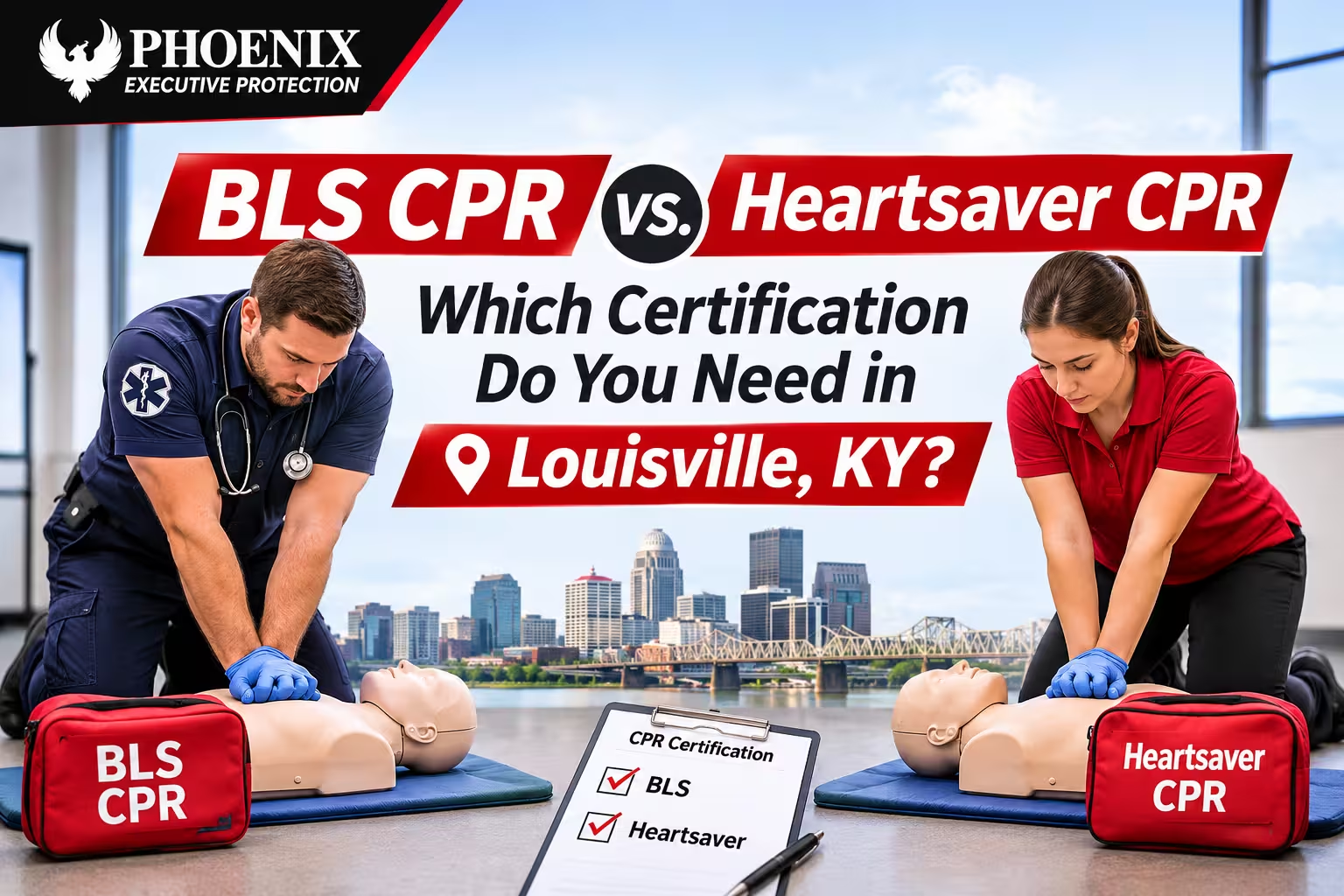
Both courses come from the American Heart Association. Both teach CPR and how to use an AED. The overlap mostly stops there. BLS trains people who work on a care team. Heartsaver trains everyday people who may be first on the scene. That one split shapes the drills you run and the card you get.
Basic Life Support for Healthcare Professionals
Basic Life Support is the AHA course for healthcare professionals. It also serves other personnel who need CPR skills in a facility or out in the field. You practice high-quality compressions on adult, child, and infant manikins. You use an automated external defibrillator. You also practice giving breaths using a barrier device or a bag-mask.
Teamwork is what sets BLS apart. You learn to work beside other rescuers. You practice swapping compressors without long pauses. You also practice communicating clearly with team members during a resuscitation. Why does that matter? In clinical jobs, staff rarely face a cardiac arrest alone.
Heartsaver CPR for Nonmedical Professionals
Heartsaver courses are designed by the AHA for people with little or no medical training. Think of the coworker who spots an emergency first. Or the teacher. Heartsaver CPR AED teaches adult CPR and how to use an AED. It also teaches choking relief. Child and infant CPR are optional modules, so not every class includes them.
The AHA says this course fits workplace CPR training that calls for an OSHA-compliant card. Need first aid as well? Consider Heartsaver First Aid CPR AED if your job requires both CPR and first aid. It is a separate course with its own card. It adds topics like bleeding and broken bones. It covers shock too. The CPR AED course does not.
Why the Two Certifications Are Not Interchangeable
A Heartsaver card and a BLS card prove different training. One shows lay rescuer skills. The other shows team-based resuscitation for a care setting. They are not swappable. Your employer or school decides which card it will accept. So check the exact course name before you enroll, not after.
Which Certification Do You Need for Your Job or Career?
Your job title alone doesn’t determine which certification you need. Two people with the same title may have different responsibilities. So set the title aside for now. Picture what you would actually do if someone collapsed at work. Then match that picture to the course your employer names.
Healthcare Workers Who May Need BLS Certification
Clinics and hospitals commonly ask nurses and doctors to hold a BLS card. Medical assistants often get the same request. Many nursing and allied health programs want BLS before clinical rotations begin. Still, the fine print varies by employer, school, and clinical site. Ask for the exact course name and required card type in writing.
Security Guards and Workplace Responders Who May Need Heartsaver
Security officers are often the closest trained adults when someone collapses in a lobby or parking lot. Heartsaver CPR AED may match what many of them need. The same goes for staff named on a company safety plan. They start CPR and grab the AED. They do not run a medical team.
There are exceptions. A hospital security team may need BLS instead, since its officers work inside a clinical setting. Contracts can add other credentials. So can site rules. Do not assume Heartsaver covers every nonmedical job just because it was built for lay rescuers. Ask first.
Teachers, Childcare Providers, and Other Nonmedical Learners
Start with one question. What ages will you need to help? Adult CPR alone may not fit someone who cares for toddlers, so ask about the optional child and infant modules. Many school and childcare roles also call for first aid. A child with a deep cut needs more than CPR. Heartsaver First Aid CPR AED may be the better match there.
How Do BLS and Heartsaver Compare in Skills and Assessment?
Course names only tell you so much. The real difference shows up in what you practice and how the instructor tests you. In both courses, learners must demonstrate CPR skills during a hands-on assessment. An instructor watches you perform. BLS adds team drills, like trading compressions in a two-rescuer scenario. The table lines up the rest.
| Comparison Point | BLS | Heartsaver CPR AED |
| Main learner group | Healthcare professionals and others who need BLS skills | People with little or no medical training |
| Training focus | Healthcare-oriented basic life support | CPR and AED response for lay rescuers |
| CPR practice | Adult, child, and infant skills | Depends on the modules in your class |
| Team response | Coordinated resuscitation | The skills of a single lay responder |
| AED skills | Included | Included |
| Skills assessment | Knowledge and practical skills test | Hands-on skills test only (Written exam required only if mandated by state or employer regulations) |
| Completion card | AHA BLS card from an authorized training center | AHA Heartsaver card from an authorized training center |
Can Your Employer Accept Heartsaver Instead of BLS?
Passing a CPR class does not mean your employer will take the card. Healthcare employers often ask for an AHA BLS Provider card by name. A nonmedical workplace may accept Heartsaver if it fits company policy. Some roles add first aid or licensing rules on top. Send these questions to your manager or HR team before you pay:
- Which exact CPR course does the employer require?
- Must the course be from the American Heart Association?
- Is BLS required, or is Heartsaver accepted?
- Does the role require adult, child, and infant CPR?
- Is first aid training required too?
- Which completion card or proof of training must you submit?
What Mistakes Should You Avoid When Choosing a CPR Certification?
Price can steer you wrong. So can convenience. A familiar course name can do it too. Most of these mistakes are easy to dodge. A short email to HR costs nothing. A second class costs another fee and another afternoon. Watch for these slip-ups before you book:
- Treating every CPR card as interchangeable
- Taking Heartsaver when your employer asks for BLS
- Booking BLS without checking that the role needs it
- Mixing up Heartsaver CPR AED and Heartsaver First Aid CPR AED
- Skipping child or infant CPR when your job involves kids
- Skipping the skills session of a blended course
- Letting your card lapse without checking its expiration date
What Should You Ask Before Enrolling in a BLS or Heartsaver Course in Louisville?
Your employer is one source. The training provider is the other. A few direct questions can keep you out of the wrong class. Ask by email so you have the answers in writing. You may need them if your employer later asks what you took.
- Is this the exact AHA course my job requires?
- Which completion card will I receive?
- Does the course include hands-on skills practice and testing?
- Is the course classroom-based or blended?
- If blended, what online work and in-person skills sessions are required?
- When is the card issued?
- How long will the card stay valid?
- Will my employer or school accept this specific card?
Frequently Asked Questions
Is BLS Better Than Heartsaver CPR?
No. Neither course is better for everyone. BLS goes deeper into team response for care settings. Heartsaver focuses on what a lay rescuer needs to know. Each one does its own job. The better course is the one that fits your duties and meets your employer’s requirements.
Can a Nonmedical Person Take a BLS Course?
That depends on the provider’s course rules. It also depends on what you actually need. Heartsaver is built for people with little or no medical training. BLS serves healthcare professionals and others who need those skills. Not sure where you fit? Ask the provider before you sign up.
How Long Does an AHA BLS or Heartsaver Certification Last?
Both cards are generally valid for two years. They last through the end of the month they were issued. So a card issued in March 2026 would run through the end of March 2028. Some employers set earlier renewal deadlines, though. Check their policy and the date printed on your own card.
Final Thoughts
BLS fits healthcare professionals and other personnel who need basic life support skills. Heartsaver fits people with little or no medical training. Let your real duties guide the choice. Then confirm the exact course and card your employer or school accepts. Do that before you enroll.
Phoenix Executive Protection LLC is a Louisville business at 4105 Bishop Ln. Its website lists American Heart Association BLS and Heartsaver courses for healthcare providers and lay responders. You can review both on the Phoenix Executive Protection LLC classes page. Once you know which card you need, call (407) 460-5976 or email admin@phoenixprotections.com. Ask them to confirm the right course, the current schedule, and how to enroll.