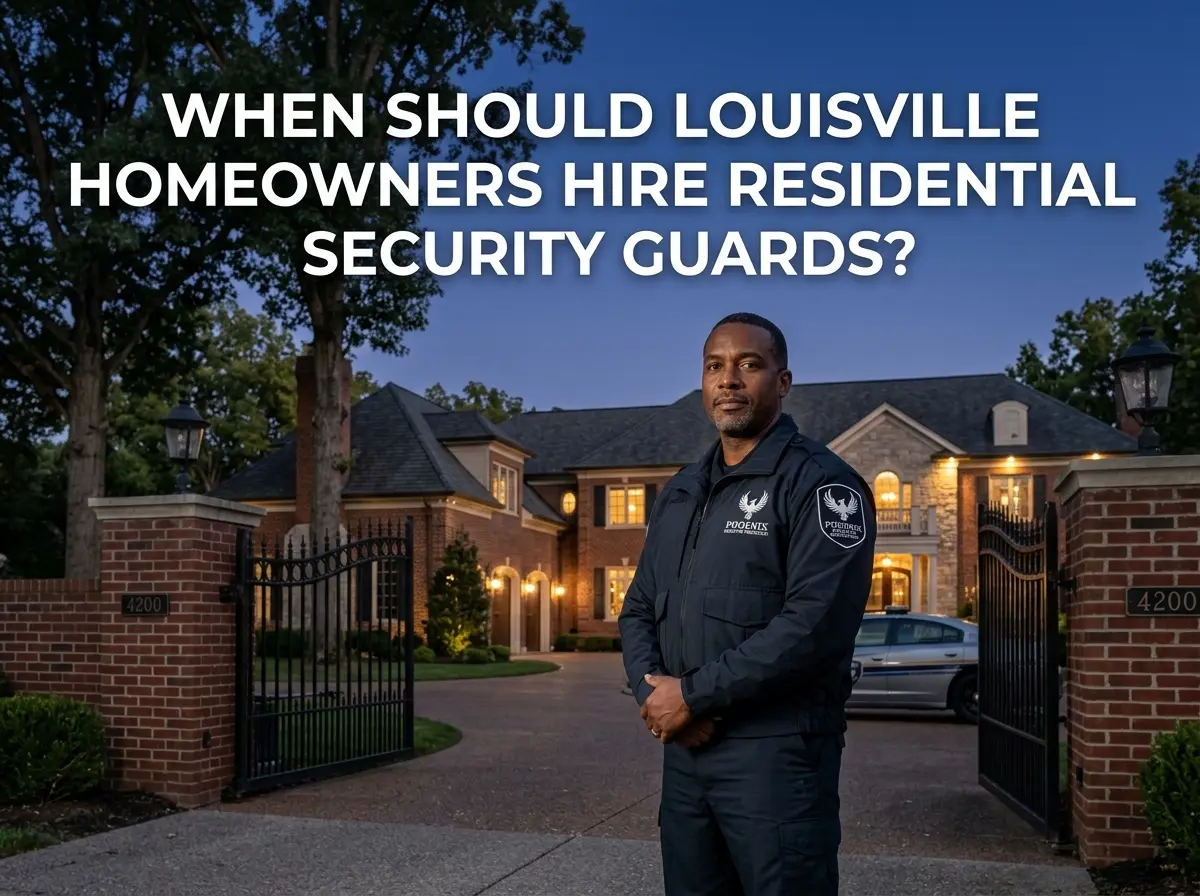
Louisville’s most exclusive neighborhoods experience a level of exposure that standard alarm systems cannot handle. Sprawling lots in Anchorage, Glenview, and Mockingbird Valley often have blind spots that invite opportunistic crime. Protecting a home this size demands more than sensors on doors and a monitoring app on your phone.
Estate security in Louisville now blends trained personnel and smart technology into one coordinated defense plan. This guide breaks down what separates basic home protection from luxury estate security, and how to close the gaps in between. You will learn what threats matter most in Jefferson County’s affluent pockets and how to build a security plan around them.
Private Residential Security vs. Luxury Estate Security
Private residential security is built for standard households, covering entry points, basic patrols, and quick alerts to local authorities. Luxury estate security operates on a different scale entirely, layering personnel, technology, and sophisticated security protocols across multi-acre properties and high-profile residents. More than the size of the covered area, the real difference lies in the complexity of coordinating people, security systems, and access points.
Here is a side-by-side breakdown of how these two protection models stack up across some of the important security metrics.
| Protection Metric | Private Residential Security | Luxury Estate Security |
| Primary Focus | Standard property coverage, entry points, and baseline family safety. | Multi-acre perimeters, asset protection, and lifestyle privacy. |
| Core Infrastructure | Standard Louisville home security systems (door sensors, smart locks, CCTV cameras). | Advanced cyber-physical networks (thermal analytics, biometrics, secure command centers). |
| Personnel Presence | Passive monitoring with automated alerts or periodic community drive-by patrols. | Dedicated, on-site private residential security guards or estate-specific patrol teams. |
| Threat Preparedness | Standard emergency response plans tailored to opportunistic break-ins or property crime. | Comprehensive residential threat assessment, custom escape logistics, and safe-room protocols. |
| Access Management | Basic visitor screening (intercoms or smart video doorbells). | Advanced perimeter checkpoints with automated license plate readers. |
The Need for Professional On-Site Security in Louisville
Jefferson County’s expansive suburban zones, including Anchorage and Prospect, stretch police resources thin across a wide geographic area. Response times in these pockets can run longer than in denser parts of Louisville. It might give intruders some extra minutes to act. Active security presence with solid prevention measures is what actually protects a home here.
The Core Pillars of On-Site Security Patrol Services
Once you have decided between residential and luxury estate security, the next step is understanding what trained personnel actually do on-site.
Property Patrols & Physical Deterrence
Marked vehicles and foot patrols form the backbone of residential security services in Louisville. They cover the ground that cameras cannot reach across wooded estate terrain. Dynamic routes prove more effective than fixed checkpoints, since experienced trespassers easily avoid predictable traps. Security officers vary their timing and paths, spotting damaged fencing, propped gates, or suspicious vehicles on the way.
Access Control & Visitor Verification
Every estate sees a steady flow of contractors, landscapers, delivery drivers, and guests, and each one needs proper screening. Strict entry protocols at front-desk checkpoints confirm identity before anyone steps past the property line. This security layer stops a huge share of property crime by itself.
Surveillance Monitoring & Alarm Response
Cameras only matter if someone is watching them and ready to act the moment an alert comes through. Real-time video analytics flag movement instantly, but trained personnel still need to confirm the threat and respond physically. Pairing security cameras with on-site officers turns a passive alert system into an active, fast-moving response.
Crime Prevention Partnership with Law Enforcement
Professional security officers maintain a visible, concierge-style presence that deters trouble before it starts. They also coordinate directly with the Louisville Metro Police Department, sharing incident reports and flagging patterns across a neighborhood. That partnership keeps response times faster and keeps LMPD informed about what’s actually happening on private estate grounds.
Security for Neighborhood Associations & Gated Communities
Individual homes or estates are not the only properties that need this layered approach; gated communities and HOAs face the same exposure.
- Gated Community Security: Restricting vehicle access through automated license plate readers paired with staffed gatehouses at every entrance.
- Dedicated Security Patrol Services: Marked vehicles roving common areas keep visibility high and discourage opportunistic property crime around the clock.
- Incident Documentation: Standardized digital logs and shift summaries track suspicious vehicles and repeat visitors over time.
- Unified Emergency Coordination: Acting as the organized point of contact during severe weather, medical emergencies, or local power outages.
Why Residential Threat Assessment Is Necessary
Before any patrol schedule or camera system installation, every estate needs a clear picture of where it is actually vulnerable. A residential threat assessment maps every vulnerability on a property. It looks at terrain, technology, daily routines, and physical entry points to find where real risk hides. The goal is to create a clear list of identified weaknesses. The residential threat assesment process in Lousiville includes:
- Perimeter Integrity Analysis: Inspecting fencing, natural terrain, and lighting gaps across rolling properties common in Indian Hills and Mockingbird Valley.
- Cyber-Physical Convergence: Identifying network weaknesses in connected smart-home hubs that could let intruders disable or spy on physical alarms.
- Behavioral Pattern Diagnostics: Reviewing travel schedules and staff routines that expose when a home sits empty.
- Structural Penetration Testing: Evaluating door frames, window reinforcement, and glass-break vulnerabilities at every entry point.
The Importance of High-Tech Security Systems
Technology and trained personnel work best when they are built to support each other, not operate as separate systems.
Smart, Layered Access Control
Layering biometrics, digital keypads, and automated vehicle barriers creates multiple checkpoints before anyone reaches the main residence. Each layer adds friction for intruders while staying simple enough for family and staff to use daily. No single point of failure exists when access control is spread across several independent layers.
AI-Powered Surveillance
Thermal imaging and advanced perimeter cameras now tell the difference between a deer crossing the yard and an actual person. This distinction is important because constant false alarms can train your staff to start ignoring the alerts over time. Smart analytics filter out the noise, so every flagged movement actually gets a second look from security personnel.
Residential Crisis Management with Dedicated Safe Rooms
Modern security plans do not ignore the possibility of criminals breaking through the security barriers. Hence, quality firms build a dedicated safe room within the estate to manage a crisis situation. Isolated communications and backup power in this room keep operations running during active threats. This area gives security officers and family members a secure place to coordinate without depending on outside utilities.
6 Critical Mistakes to Avoid When Securing a Louisville Estate
Even well-funded security plans fail when they repeat the same avoidable mistakes seen across Louisville’s affluent neighborhoods.
- Building defense strategies on guesswork instead of a structured residential threat assessment leaves major blind spots unaddressed.
- Believing cameras alone prevent crime ignores the need for an on-site, physical human element to actually respond.
- Failing to practice emergency response, fire evacuations, or safe-room lockdowns with family and staff wastes critical time when it matters most.
- Allowing outside maintenance crews onto the property without background checks or supervised access invites unnecessary risk.
- Managing primary security infrastructure over a standard, unsecured home Wi-Fi network creates an easy digital entry point.
- Overlooking local privacy ordinances on street-facing cameras or licensing requirements for armed guards creates legal issues.
How to Choose a Premium Security Partner in Louisville
Confirm Kentucky licensing compliance, liability insurance, and background checks for every officer assigned. Skipping this step leaves homeowners vulnerable if an incident escalates into a legal or insurance dispute later. Ask for documentation upfront, since a credible security company will have these records ready to share.
Commitment to Discretion and Cultural Fit
Not every security company understands the discretion that high-profile clients in quiet, established neighborhoods actually require. The right partner specializes in low-profile, white-glove protection that fits a luxury lifestyle without causing visible disruption. Ask how their officers are trained to interact with staff and family before signing any contract.
Scalability and Armed Security Options
A strong provider scales smoothly from everyday home security services in Louisville KY, up to full armed security assignments. This matters most during high-profile local events like Kentucky Derby week, when demand for private security spikes citywide. Confirm your provider can flex staffing levels up or down without sacrificing the quality of coverage you depend on.
Protect Your Louisville Estate With Expert Security Services
Phoenix Executive Protection LLC builds custom estate security in Louisville around your property and your privacy. Our officers handle everything from routine patrols and access control to full residential threat assessments for multi-acre estates. Contact our team today to schedule a property walkthrough and build a protection plan that actually fits your home.
Frequently Asked Questions
What is the primary difference between standard home alarms and private residential security?
Standard alarms react only after a breach occurs and simply alert dispatchers, while private security actively deters threats, responds physically, and intervenes the moment trouble starts.
Why do estates in areas like Glenview or Anchorage require localized security patrol services?
Large acreages create blind spots far from the main house, so mobile guards must actively check fence lines and manage every estate access point.
How often should a residential threat assessment be updated?
Assessments should happen annually, or right away after major changes in estate staff or any noticeable shift in regional threat activity.